
If you follow financial news on a regular basis, you will hear the term ‘leveraged buyout’ from time to time. What exactly does it mean, how is it conducted, and what constitutes a great leveraged buyout?
If you are looking to get into the finance business, it is important to fully understand how this process works. Below, we will break down every aspect of this business acquisition tool.
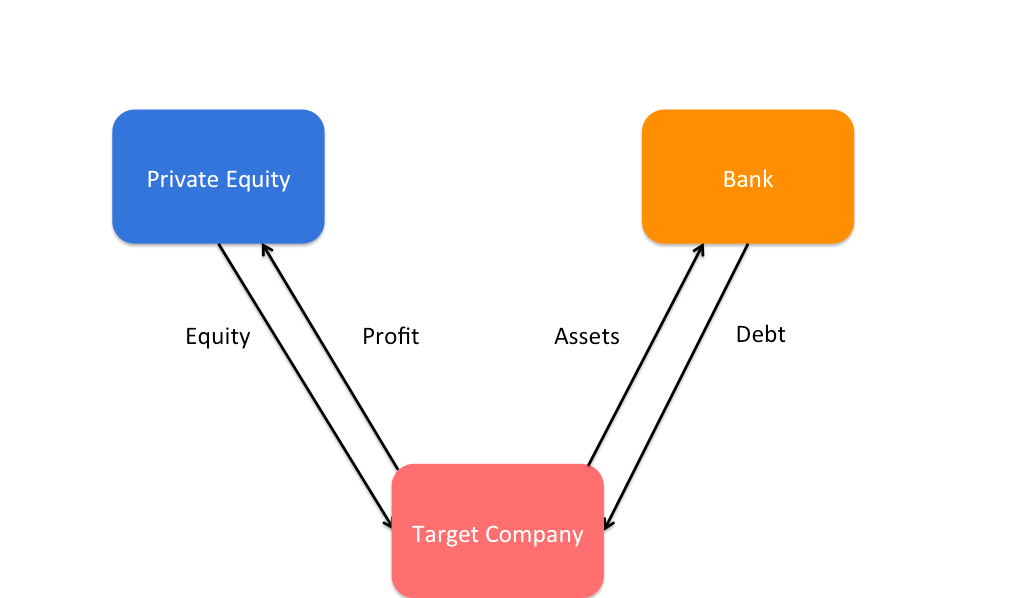
What is a leveraged buyout anyway?
A leveraged buyout occurs when a private equity firm funds the purchase of a company using capital raised from external sources.
Targeting companies that still have solid fundamentals but are experiencing financial difficulties, this is the sort of transaction that finance professionals such as Marc J Leder have a great deal of experience conducting.
Determining the amount of exposure
Not all the money used in a leveraged buyout is fronted by the private equity firm. As the term suggests, the acquisition of a company is conducted by constructing a portion of the purchase from sources such as bank loans and bond purchases.
If the business is on the smaller side, or if the level of risk is relatively low, a larger portion of the buyout will come from the equity firm’s own money. When the price tag is bigger, or if the level of risk is higher, the firm will raise more money from external sources to limit its own exposure to a default.
Evaluating companies
When a private equity firm is searching for a company to acquire, there are many conditions that need to be satisfied before they will pull the trigger on a purchase. They will look for a company that has had a history of strong cash flows and healthy profit margins.
The company must also have a position within their industry that can be easily defended, and the management team in place should be competent with regards to their duties.
The primary objective when acquiring a company is to fix the one or two issues that are holding it back from peak performance. Acquiring companies that have major foundational issues is a recipe for disaster at any price.
A key strategy: look for solid tech businesses
While private equity firms often seek out solid companies that are suffering from some sort of financial or internal distress, another place where leveraged buyouts occur is in the tech sector.
In this busy sector of the economy, there are numerous founders that are drowning in work. They desperately want to get out from underneath their creations, as their companies consume all of their time, making it impossible to enjoy the financial success that they have built over countless 12 hour work days.
It is important to ensure that the product that they have built brings in significant revenue, as there are many companies that have a software product that may pan out in the long run, but doesn’t currently bring in a significant amount of income.
With a proven cash flow and a dedicated user base though, these tech businesses can be further improved and resold for a handsome profit.

Kidal Delonix is a contributor to Mr. Hoffman's blog. The views and opinions are entirely his/her own and may not reflect Mr Hoffman's views.


Learn more

Once upon a time, disaster recovery was about fixing roads and buildings after some sort of natural phenomenon. Today, however, things have change ...

Making Sense of the Cape's One-of-a-Kind Water Issues Geospatial Perspective: Cape Cod Has Big and Bad Water Problems Cape Cod is a peninsula kn ...

The monetary policy represents the tools of a central bank to keep inflation under control. That is if inflation is the only thing part of a centr ...

The ignorant perceive gaming as a waste of time, money, and energy, but the educated know that there’s more to gaming than meets the eye. Gaming i ...

Offshore software development is huge. Countries like India, China and Vietnam are making a killing out of outsourced software development jobs. A ...


