
Every business has to deal with unexpected losses of goods and money, especially in the retail sector. Whether by employee theft and error, or outside causes like robbery, a company will miss out on bottom-line profits without careful loss management and prevention. A key component of loss management is the loss prevention officer. Here’s what you need to know about the art of professional loss prevention.
Causes of Loss
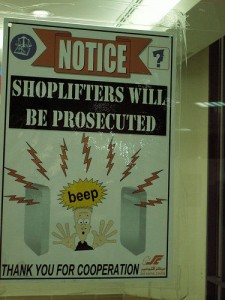 There are two main sources of loss, also known as “shrinkage”:
- Internalloss results from employee fraud, theft, and error. This can be as simple as an employee stealing stock or money from the register, or as complex as a consistent accounting mistake deep in the company’s ledgers.
- Externalloss comes from theft or errors from outside the company. This usually refers to theft by customers or robbery, but it can also include errors and fraud from suppliers and other partner organizations.
Officer’s Role
Loss prevention officers focus on preventing internal and external loss from theft and robbery. Accounting and supplier issues are better addressed by managers. According to the Centre for Retail Research, a majority of loss in the retail sector occurs due to internal and external theft, so the loss prevention officer’s domain is the most important to reduce shrinkage. Many officers operate as “plain clothes” employees, so they can more closely observe suspicious behavior without worrying about being identified.
Loss prevention officers patrol the store and look out for activity that may be linked to theft. This doesn’t always mean a customer or employee simply taking money or goods. For example, a common kind of retail fraud is the false return. An employee, customer, or even a cooperative effort between an employee and a third party, may manipulate the store’s return policy to “return” goods that were never actually purchased. A loss prevention officer must be aware of the many kinds of theft and fraud possible in a retail space.
In cases of external theft, a loss prevention officer is also often the first point of contact for police.
Becoming a Loss Prevention Officer
The demand for loss prevention officers is expected to rise over the next decade, so many programs offering a degree in criminal justiceare starting to include specialty focuses in loss prevention practices. In addition to a relevant degree and training, loss prevention officers should have clean criminal records and no history of drug use. Experience in retail is also a plus.
Career Advancement in Loss Prevention
Loss prevention officers have many options for a career path starting at the retail level. Those who wish to stay within the loss prevention field can advance to supervisory roles and eventually integrate their experience into the development of prevention programs and methodology for larger businesses. Loss prevention is also a good place to get experience ahead of pursuing a career as a police officer, private investigator, or security expert.
Methods for preventing loss are always evolving. Businesses benefit greatly from loss prevention professionals who have up-to-date training and a desire to shape a lifelong career in the field.

Kidal Delonix is a contributor to Mr. Hoffman's blog. The views and opinions are entirely his/her own and may not reflect Mr Hoffman's views.


Learn more

Making Sense of the Cape's One-of-a-Kind Water Issues Geospatial Perspective: Cape Cod Has Big and Bad Water Problems Cape Cod is a peninsula kn ...

There are a lot of essentials that you have to prepare in order to succeed, especially in the B2B market. In a previous article, we talked about s ...

When it comes to workplace rules and regulations, there is one that small businesses tend to overlook; the drug policy. Regular drug testing is a ...
Navigating the world of LinkedIn prospecting can feel overwhelming, especially when you're trying to juggle personalized outreach with the sheer v ...

As the world becomes smarter, data is becoming the key to gaining a competitive advantage. Businesses collect a lot of data, either through their ...


